Express Plumbing plumbing guide · July 13, 2026
Hard Water in Connecticut: Signs, Effects, and Why a Water Softener Is Worth It
Connecticut has some of the hardest water in the Northeast. If you live in Southington, Meriden, Cheshire, or nearby towns, hard water could be quietly damaging your pipes, appliances, skin, and wallet.
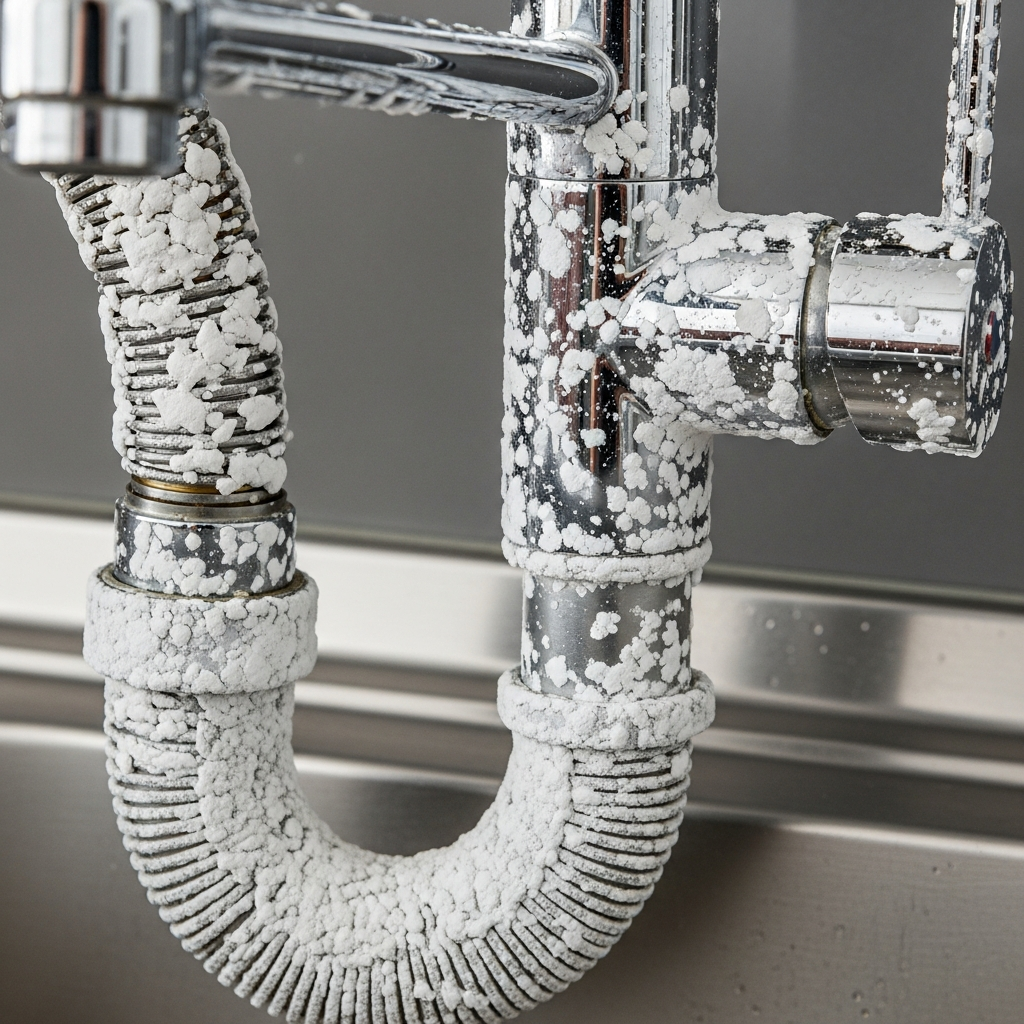
If you live in Southington, Meriden, Cheshire, Wallingford, Berlin, New Britain, Bristol, Plainville, Wolcott, Middletown, or anywhere in Central Connecticut, there is a good chance your home has hard water. Connecticut consistently ranks among the states with the hardest municipal and well water in the Northeast — and most homeowners have no idea the damage it is quietly doing.
Here is what you need to know.
Which Central CT Towns Have Hard Water?
Hard water is widespread across Central Connecticut. Whether your home is on a municipal supply or a private well, elevated mineral levels are common in this region. Some of the most affected communities include:
- Southington
- Meriden
- Cheshire
- Wallingford
- Berlin
- New Britain
- Bristol
- Plainville
- Wolcott
- Middletown
- Durham
- Middlefield
- Portland
Well water homes in the area tend to be hit hardest, since groundwater picks up calcium and magnesium as it passes through Connecticut's bedrock. But many town water supplies in the region also test above recommended hardness thresholds.
What Is Hard Water?
Water is considered hard when it contains high levels of dissolved minerals, primarily calcium and magnesium. These minerals are picked up naturally as water moves through rock and soil before reaching your home.
Water hardness is measured in grains per gallon (GPG). Anything above 7 GPG is considered hard. Many Central CT homes — particularly those on well water in towns like Wolcott, Cheshire, and Southington — measure 10 to 25 GPG or higher.
Signs You Have Hard Water
White or Chalky Buildup on Fixtures
That crusty white or yellowish residue around your faucets, showerheads, and drains is mineral scale — the most visible sign of hard water. It is not just ugly. Over time, it can clog aerators, restrict flow, and damage fixture finishes.
Soap That Will Not Lather
Calcium and magnesium react with soap and detergent, reducing their ability to lather. If you find yourself using more soap in the shower, more detergent in the laundry, or your dishes still look filmy after washing — hard water is likely to blame.
Dry Skin and Brittle Hair
Hard water leaves a thin mineral film on your skin and hair after showering. It disrupts the skin barrier, traps soap residue, and can make hair feel dry, dull, and difficult to manage. People with eczema or sensitive skin often notice significant improvement after softening their water.
Stiff, Scratchy Laundry
Mineral deposits bind to fabric fibers during washing, leaving clothes feeling rough even after laundering. Colors can also fade faster. If your towels feel like sandpaper or your whites are going gray, hard water may be stripping the life out of your laundry.
Appliances Failing Sooner Than They Should
This is where hard water becomes a serious financial problem. Scale builds up inside water heaters, dishwashers, washing machines, and coffee makers — reducing efficiency and shortening their lifespan.
The Real Cost of Hard Water
Hard water is not just an inconvenience. The long-term financial impact adds up fast.
- Water heaters lose efficiency as scale insulates the heating element. A heavily scaled unit can use 25 to 50 percent more energy to heat the same amount of water.
- Pipes and fixtures corrode faster and require earlier replacement.
- Appliances that should last 10 to 15 years may fail much sooner.
- Soap and detergent costs increase because hard water requires more product to do the same job.
Studies by the Water Quality Research Foundation found that appliances running on soft water lasted significantly longer and used measurably less energy than those running on hard water.
Why a Water Softener Makes Sense
A whole-house water softener works by replacing calcium and magnesium ions with sodium ions through a process called ion exchange. The result is soft water throughout your entire home — every tap, every shower, every appliance.
The benefits are immediate and lasting:
- Scale stops building up in pipes and on fixtures
- Appliances run more efficiently and last longer
- Skin and hair feel noticeably better
- Soap and cleaning products work the way they are supposed to
- Laundry comes out softer and colors stay brighter
For well water homes in towns like Wolcott, Cheshire, and Southington, a softener is often paired with a filtration or treatment system to address iron, bacteria, or other contaminants alongside the hardness.
Is a Water Softener Right for Your Home?
The best way to know for sure is to test your water. We can help you understand what is in your water and recommend the right solution for your home — whether that is a traditional salt-based softener, a salt-free conditioner, or a full treatment system.
At Express Plumbing, we install and service water treatment systems throughout Southington and Central CT. If you are in Southington, Meriden, Cheshire, Wallingford, or any surrounding town and are tired of dealing with the effects of hard water, give us a call at 860-773-9876 or use the contact form on our site to schedule a consultation.