Express Plumbing plumbing guide · July 29, 2026
Water Pressure Problems: What's Normal, Signs Something's Off, and Why High Pressure Is Quietly Damaging Your Home
Most homeowners notice low water pressure right away — weak showers, slow-filling tubs, inconsistent temperatures. High pressure is the opposite problem, and it does far more damage. Here is what to look for and what to do about both.
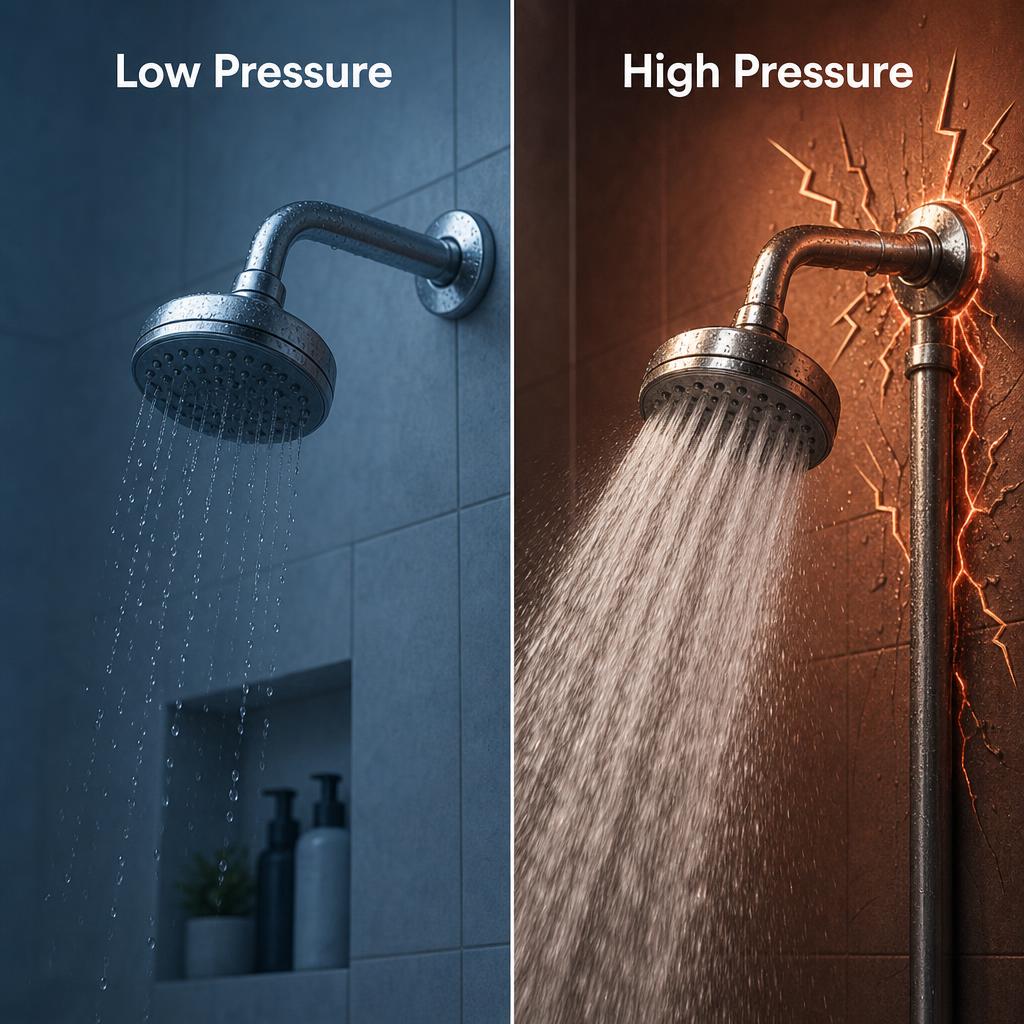
Most homeowners notice when their water pressure is too low. A weak shower. A sink that takes forever to fill. A washing machine that drags through its cycle. It is frustrating, and it usually sends people straight to Google looking for answers.
What most homeowners do not know is that high water pressure is just as common — and far more destructive. It quietly wears out your appliances, damages your fixtures, and strains every pipe and fitting in your home. Most people never find out until something fails.
This guide covers both: what normal pressure looks like, why yours might be too low or too high, and what you can actually do to fix it.
What Is Normal Water Pressure?
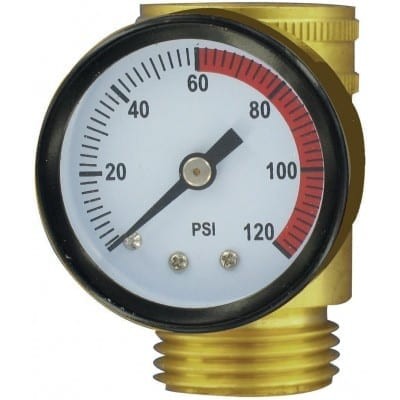
Water pressure is measured in pounds per square inch, or PSI. For a residential home, the ideal range is 40 to 60 PSI. Most plumbers aim for around 50 PSI — enough to run a strong shower and fill appliances efficiently, without putting unnecessary stress on your system.
Anything below 40 PSI starts to feel noticeably weak. 80 PSI is the maximum pressure allowed in a residential plumbing system — and appliances, fixtures, and pipe fittings are simply not designed to withstand pressure above that level.
If you are unsure what your home's pressure is running at, give us a call — we can test it quickly during any service visit.
Signs Your Water Pressure Is Too Low
Weak Flow at Multiple Fixtures
If one faucet is weak, the problem is usually localized — a clogged aerator, a partially closed valve under the sink, or a fixture-level issue. But if multiple fixtures throughout the house feel weak at the same time, that points to a broader pressure problem. We see this in homes of all ages throughout Southington, Meriden, Cheshire, and Berlin — towns where hard water buildup is common in both new construction and decades-old pipes.
Inconsistent Water Temperature in the Shower
When water pressure drops, hot and cold water cannot mix the way they are supposed to. You might find yourself constantly adjusting the handle just to stay comfortable — or getting hit with a blast of cold when someone else in the house flushes a toilet.
Slow-Filling Appliances
Washing machines, dishwashers, and ice makers all rely on adequate pressure to fill properly. If your washing machine takes significantly longer than it used to, or your dishwasher leaves residue because it is not rinsing properly, low pressure may be the cause.
Reduced Flow in Upstairs Fixtures
Water has to fight gravity to reach upper floors. Homes in hillier areas of Central Connecticut — parts of Cheshire, Wolcott, and Southington — sometimes sit at elevations where street pressure is already marginal. The result is a noticeably weak shower on the second floor while everything downstairs seems fine.
Common Causes of Low Water Pressure
Corroded or Mineral-Scaled Pipes
This is one of the most common causes we see across Central Connecticut, and it affects homes of all ages. Hard water is widespread throughout the region. Towns like Southington, Meriden, Wallingford, Plainville, New Britain, Bristol, and Waterbury all have water supplies with elevated mineral content. Over years, calcium and magnesium deposits build up on the inside of pipes — particularly galvanized steel, which was standard in homes built before the 1970s. The opening narrows, flow drops, and no amount of adjusting at the valve will fix it. The pipes need to be assessed and, in many cases, repiped.
A Partially Closed Main Shutoff Valve
This sounds obvious, but it is often overlooked. If your water pressure dropped suddenly after any kind of plumbing work — a repair, an inspection, a service call — someone may have closed the main shutoff valve only partway when they finished. The main shutoff is usually located where the water line enters the house. Make sure it is fully open.
A Failing or Misadjusted Pressure Reducing Valve
Most homes in Central CT have a pressure reducing valve — also called a PRV — installed where the water line enters the house. Its job is to step down the pressure from the municipal main to a safe household level. PRVs typically last 10 to 15 years. When they start to fail, they can restrict pressure more than they should — sometimes all the way down to a trickle. A plumber can test yours and either adjust or replace it.
Municipal Supply Issues
Sometimes the problem is not your home at all. Water main repairs, seasonal demand changes, or pressure fluctuations from your town's water authority can temporarily reduce household pressure. This affects homeowners on town water in Southington, Meriden, Cheshire, Plainville, Berlin, Newington, Glastonbury, Wethersfield, Rocky Hill, and surrounding communities. If your neighbors are experiencing the same thing, call your water provider.
Well Pump Problems
For homes on well water — common in Wolcott, Cheshire, Southington, Farmington, Durham, Middlefield, and many rural parts of Central Connecticut — low pressure often points to a failing well pump or a waterlogged pressure tank. Well systems use a pressure tank to maintain consistent flow between pump cycles. When the tank loses its air charge, pressure swings wildly and the pump has to run almost constantly. A waterlogged tank is one of the most common causes of well pressure problems we see in this area.
Signs Your Water Pressure Is Too High
This is the problem most homeowners miss entirely. High water pressure does not usually feel like a problem in your daily routine — in fact, it often feels great. A powerful shower, quick-filling sinks. What you do not feel is the damage it is doing behind the walls.
Banging or Knocking Pipes
Water hammer — that loud banging noise when you shut off a tap or an appliance finishes filling — is one of the clearest signs of high water pressure. It is caused by the momentum of fast-moving water slamming to a stop. At high pressure, that force is significant and, over time, it can loosen pipe joints, damage fittings, and stress appliances.
Constantly Running or Dripping Faucets and Toilets
High pressure forces water past seals and washers that were not designed for that much force. Faucets start to drip even when fully closed. Toilet fill valves constantly trickle because the float cannot fully shut the valve against the incoming pressure. These are not fixture problems — they are pressure problems, and replacing the fixture will not fix them permanently.
Appliances Wearing Out Earlier Than They Should
This is the most expensive consequence of high water pressure, and it is almost invisible until something breaks.
Your water heater, washing machine, dishwasher, refrigerator ice maker, and any other water-connected appliance were designed for 80 PSI or below. Your fixtures and fittings are built to the same standard. When pressure exceeds that limit, every component in your system is operating outside what it was designed to handle, every single time the water runs. A dishwasher or washing machine that should last 12 years might fail in 6 or 7. A water heater that should give you 10 to 12 years of service may start leaking at 7 or 8.
High Water Bills
When pressure is too high, more water flows through every fixture faster than necessary. That extra volume adds up on your bill — quietly, every month. Homeowners in Bristol, Wallingford, Middletown, Colchester, and other towns served by municipal water systems sometimes find that correcting high pressure noticeably reduces their monthly usage.
Noise From the Toilet Fill Valve
A high-pitched hissing or whining sound when the toilet is filling is a common sign of high pressure overworking the fill valve. Most people chalk it up to an aging toilet. Often, it is a pressure problem.
The Fix: The Pressure Reducing Valve
If your home's pressure is too high — or if you have a PRV that is failing and causing low pressure — the solution is the same: the pressure reducing valve.
A PRV is a small but important device installed on your main water line, usually just after the shutoff valve near where the line enters your home. It contains an adjustable spring mechanism that automatically steps down the incoming municipal pressure to the target range you set.
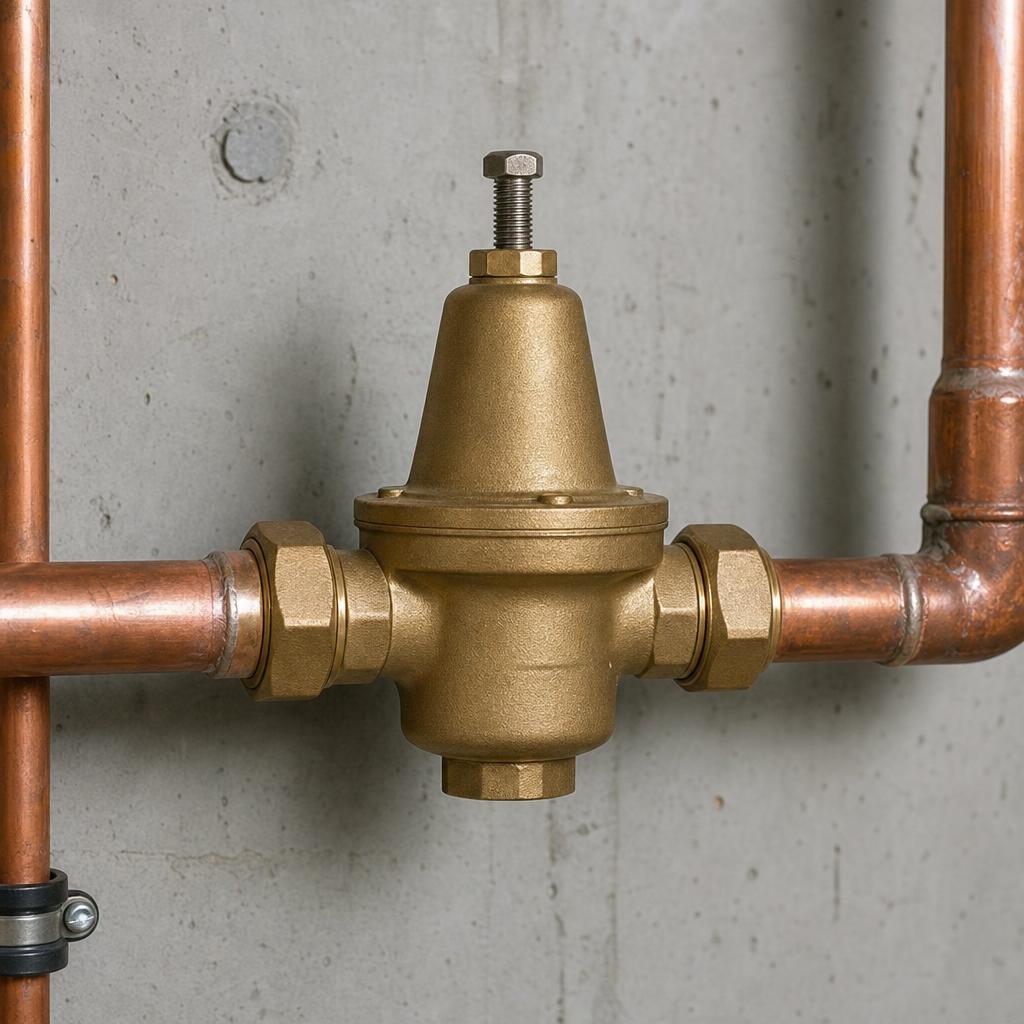
Installing or replacing a PRV is best left to the professionals. The work involves cutting into the main water line, proper sizing of the valve for your home's demand, and setting the correct output pressure. Done right, a properly installed PRV lasts a decade or more.
How Much Does It Save?
The savings from correcting high water pressure are real and ongoing:
- **Appliance lifespan**: Dishwashers, washing machines, and water heaters last significantly longer when not operating under excess pressure. Even extending an appliance's life by two or three years adds up to hundreds of dollars.
- **Water bills**: Reducing pressure from 100 PSI to 55 PSI can cut water consumption noticeably in many homes, depending on fixture types and usage.
- **Repair bills**: Dripping faucets, running toilets, and failed washing machine hoses are all more common in high-pressure homes. Fixing the root cause eliminates recurring repairs.
- **Water heater efficiency**: High pressure means your water heater's pressure relief valve may activate more frequently, wasting energy and wearing out the valve. A properly set PRV protects the whole system.
We Serve All of Central Connecticut
We install and service PRVs, diagnose pressure problems, and handle pipe work throughout the region — including Southington, Meriden, Cheshire, Wallingford, Bristol, Plainville, Berlin, Wolcott, Farmington, New Britain, Waterbury, Newington, Middletown, Glastonbury, Wethersfield, Rocky Hill, Colchester, Durham, Middlefield, and Portland.
If you have questions about your water pressure — whether your shower has been getting weaker, you are hearing banging pipes, or you just want to know where your home stands — give us a call. We can test your pressure, assess your PRV, inspect your pipes, and give you a straight answer about what needs to be done.
Call us at 860-773-9876 or use the contact form on our site to schedule a visit.